View Case Study →

Clear direction.
AI agentic workflows.
Shared success.
Alex McLean IIISenior Director, Product Design
Education Services helps Sallie Mae meet students long before they need a loan, through scholarships, college planning tools and Sallie.com. Our goal is engagement, because engaged members become customers of the private student loan business at the heart of Sallie Mae.
Members who engage with our experiences apply for a private student loan at three times the rate of those who don't.
Engagement comes from things like the $2,000 No Essay Scholarship, scholarship search and our planning tools. That makes every experience we design part of the enterprise story.
Stronger engagement goes hand in hand with more loan applications. That gives our work a purpose beyond any single product: building relationships that matter across Sallie Mae.
I built and lead the design team, align our partners, and guide the experiences and experiments behind that engagement. The results are a shared effort across Education Services.
Source: Education Services member program report, 2026. A comparison of engaged and non-engaged members, not the effect of any single leader or project.
Leadership means giving people enough context to make good decisions, and staying close enough to help when it matters.
Connect the customer problem, the business goal, how we'll measure success and the constraints before we commit to a direction.
Give people real responsibility. Then use coaching, critique and barrier removal to help them grow into it.
Bring research, testing and analytics into every decision. Make the tradeoffs visible and the learning useful.
I grew a small team around what the business needed next: product depth, visual craft, systems thinking and people leadership.
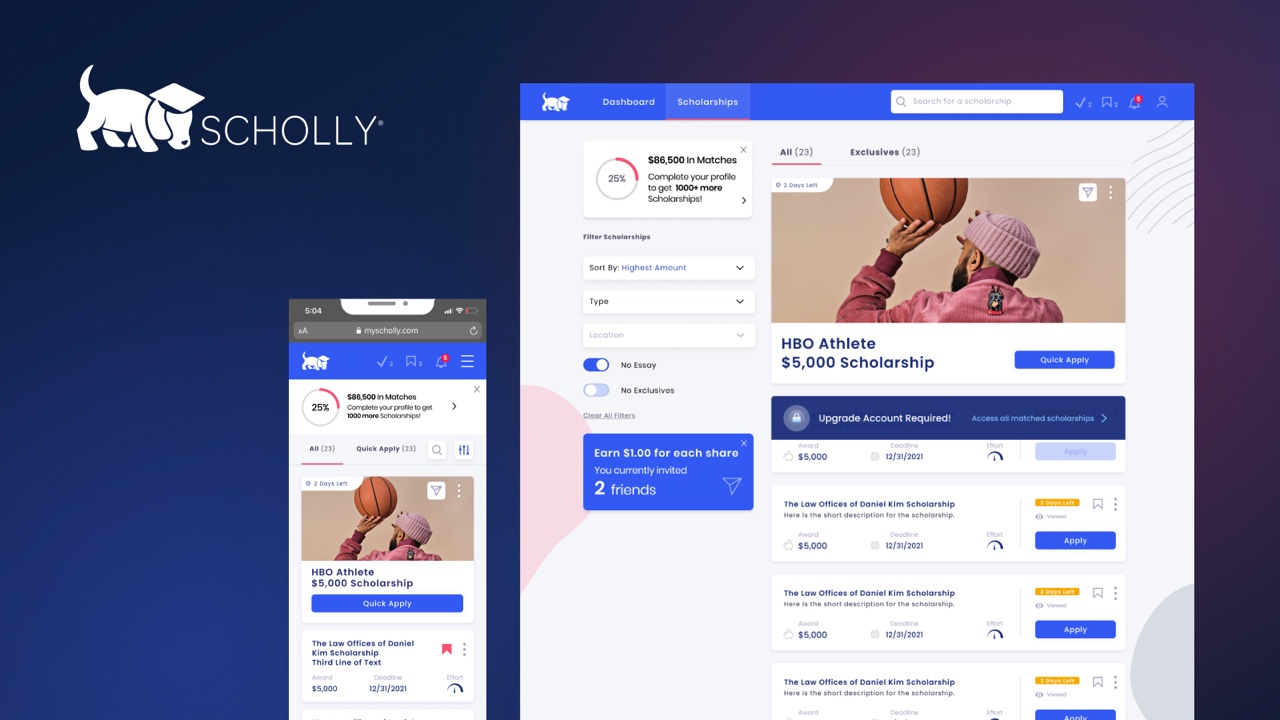
I came from Scholly, where I led design, and kept working in Figma while I built the Education Services team. Staying close to the craft helped me guide the work, understand delivery constraints and support the people doing it.
As the team grew, I made room for leaders to shape their own areas. Shared practices and our Odyssey design system carry quality from one project to the next, without every decision running through me.
Fill the gap, don't duplicate strengths.
Critiques, walkthroughs and exercises.
Developers and stakeholders help evaluate.
The team scores evidence together.
High standards.Honest conversations.Meaningful ownership.
Enough direction to move with confidence. Enough space to bring their own judgment.
I build trust by making the purpose clear, showing the evidence and inviting partners into decisions while they can still shape the outcome.
For Front Door, I guided steering-committee reviews with business leadership, Brand and Insights. When Smart Takes changed the brief, I led the team through the pivot and used customer feedback to sharpen the direction.
I presented Front Door at a company All Hands, the annual senior leadership meeting and a Board meeting, answering questions alongside the CMO. My job was to connect the work to the priorities of the people in the room.
Partners: Product, Insights, Analytics, Engineering, Brand, Marketing, WebOps, DevOps and senior leadership.
I encourage new technology, and I make the expectations for using it clear.
After Front Door launched, I encouraged Figma Make for exploring and prototyping, and had the team install Codex and connect it to Figma. That setup now supports our component templates, tokens and styles.
When generated layouts started arriving without context, I wrote to business leaders: bring the goals, requirements and reasoning along with the visual. People stay accountable for their thinking. Design stays accountable for the final experience.
“AI can help visualize thinking, but it shouldn’t replace the thinking itself.”
From my note to business leaders
Good leadership should show up in outcomes. These are documented results from work I helped lead, and the winners became the new default in production.
Loan application rate
Engaged members vs. non-engaged members
Smart Takes click-through
Homepage placement test, summer 2026
Product-card click-through
Same test. The winner became the new default.
Loan application submit rate
Personalized confirmation pages, now live on five
Relative lifts from separate tests in 2026, built with Product, Analytics and Engineering. They aren't added together and don't isolate the effect of my leadership.
Build the capability.Create the evidence.Earn the trust.Scale the impact.
See the work →